Here's a closeup look at a piece of 35mm film — the kind you'd find in the projection room at your neighborhood multiplex theater.

Now let's take a closer look at the right-hand edge of the filmstrip.

The big white holes are "sprocket holes," which the projector grips onto in order to pull the film along — and, more importantly, to stop it for the briefest fraction of a second so that the individual frames can register on the eye.
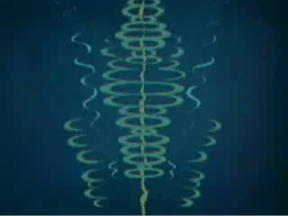
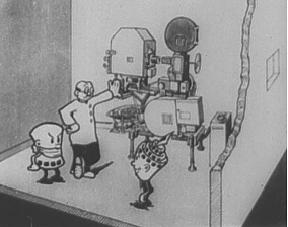
The two squiggly white lines at the left are the sound — two lines because it's been recorded in stereo.
But how does the soundtrack actually work?
And if you really want to study film sound in depth, spend some time at filmsound.org,
a very detailed website that's well worth exploring.
a very detailed website that's well worth exploring.